
Our Gallery

Contact Info

Unit 10, Apollo Court
Radclive Road
Buckingham
MK18 4DF

Folow Us

Category: Office Design

Ideas for your Office Breakout Area

Investing in your workspace matters to your staff and can impact the success of your overall company. One important space to consider for your office is an office breakout area.

Our article will explore why you should consider the merits of a breakout space within your workplace, including:

  • What is an office breakout area?
  • What to include in an office breakout area?
  • Office breakout area ideas
  • Office breakout area furniture

A 2019 report carried out by Staples found that 68% of staff would feel more valued at work if their organisation invested in their workspace, and as Paul Zollinger-Read, former Bupa Chief Medical Officer so nicely put it “as individual happiness is linked to productivity, satisfaction, and fulfilment – why wouldn’t we invest in our spaces?”

What is an office breakout area?

An office breakout area is an area for employees to take a break from their desks and screen. Within the modern working environment, where much more of our time is spent in front of a screen, it is important for employers to not only provide a breakout area for staff but to encourage its use.  

These areas can be versatile and used to not only provide a space for staff to enjoy their lunch (the more traditional reason for creating a breakout space). Office breakout areas also create:

  • Informal meeting areas
  • Space where people can catch up on their personal ‘life admin’
  • An area to socialise with colleagues around a tea-point
  • A place to rest their eyes from the screen!

By providing a space that is more relaxed, it gives employees time for rest and rejuvenation throughout the day. Breaks like this are important, as employees can return to their desks revitalised and raring to go. Such breaks in the day can result in better productivity compared to an office where employees never leave their desks!

These areas can also function as an alternative workspace for tasks that require collaborative or creative thinking.  Sitting in a more relaxed environment alone or with a colleague, in a separate space away from general office noise, can be beneficial when brainstorming new ideas of having important discussions.

What to include in an office breakout area?

Due to the versatility of these spaces, it is important to consider the office breakout area design so it caters to everybody and works with the existing office.

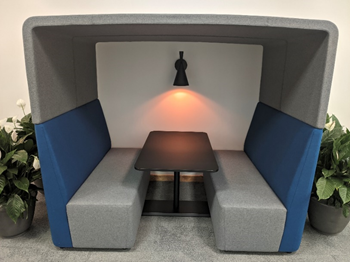
The available space for your breakout area will depend on the size of your business premises and the number of staff you have. With developments in acoustic screening and pods, you will not need a huge space, particularly if you are an SME employer. The use of acoustic furniture is an ideal way of creating small breakout spaces in pockets around your offices. Pods or booths, as featured below can offer an area where several colleagues can meet, shutting out the background noise.
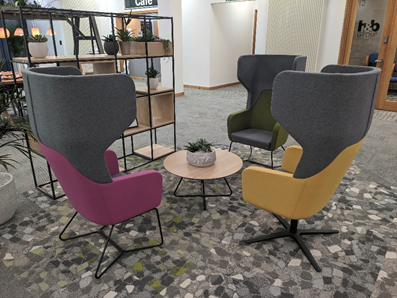
The acoustic winged chairs used in The Parks Trust atrium in Milton Keynes are a brilliant way of providing relaxing seating, that when you sit back, the cleverly developed wings help block out background noises.
Depending on how you want staff to use the breakout spaces will determine what you should include. As well as the acoustic seating options above, if you have the luxury of a separate room or space for your breakout area, creating different zones could be an option for you.

Office breakout area checklist

  • A tea-point or kitchen facility
  • Fuctional seating with table for either eating or meetings
  • Relaxed seating
  • One to one booths
  • Quiet working areas
  • Social Areas
  • A library
  • Charging areas (ports for technology devices)
  • Games/Chillout space

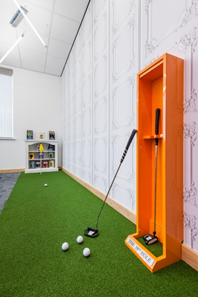
The ‘comparehemarket.com’ common room has a putting green in it to help staff relax on their break.

Office breakout area ideas

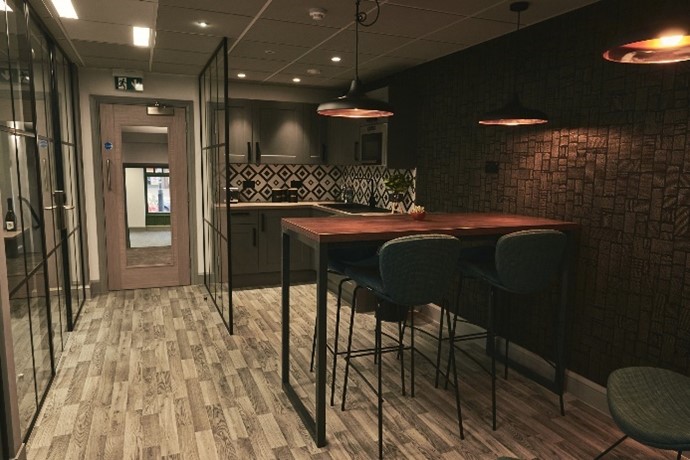
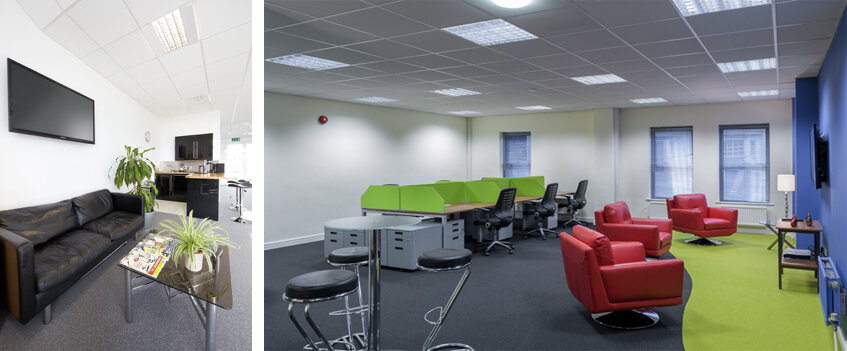
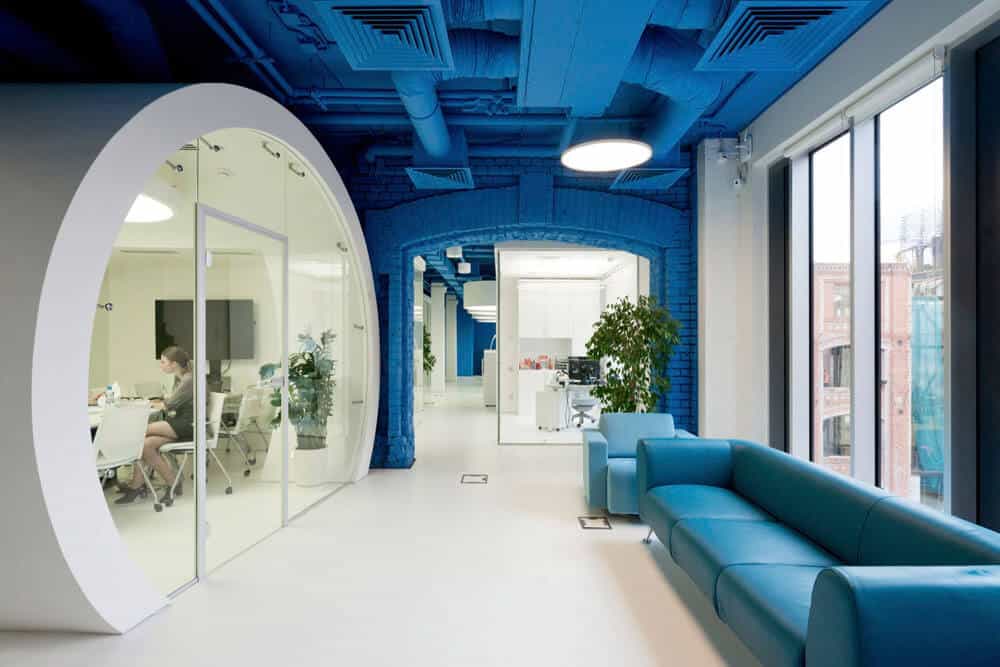
In order to transform an office space and improve employee wellbeing, morale and productivity, we have put together some office breakout area ideas from previous client projects. This small selection illustrates the different look and feel that can be created within a breakout area.
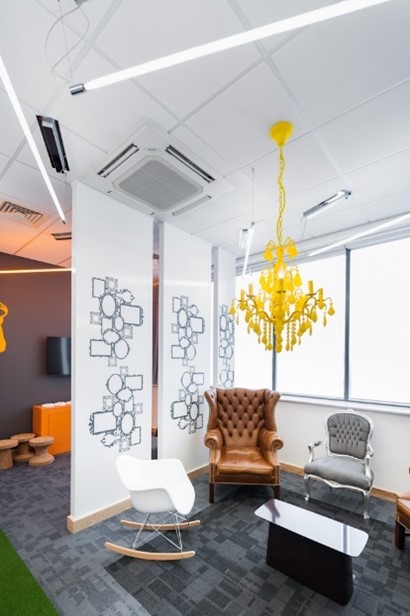
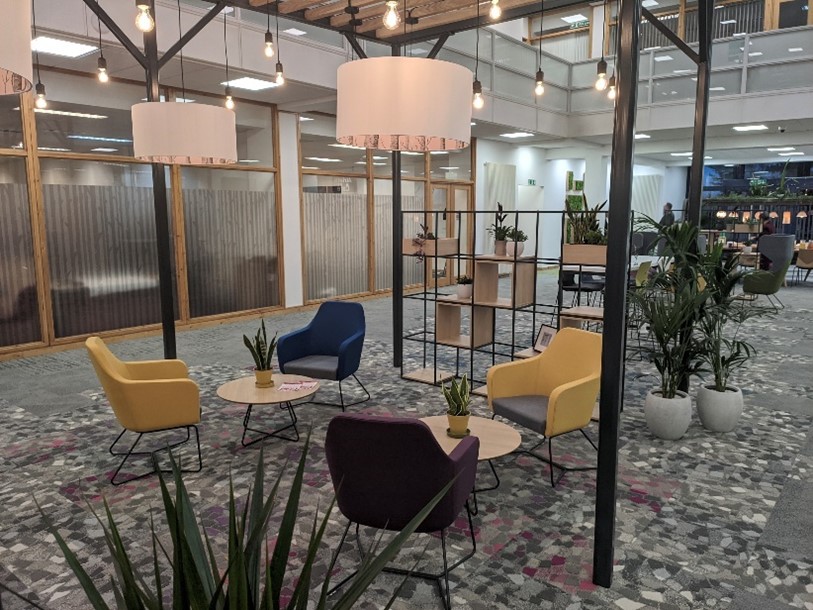
Elements that can be incorporated within these breakout spaces are outlined below.

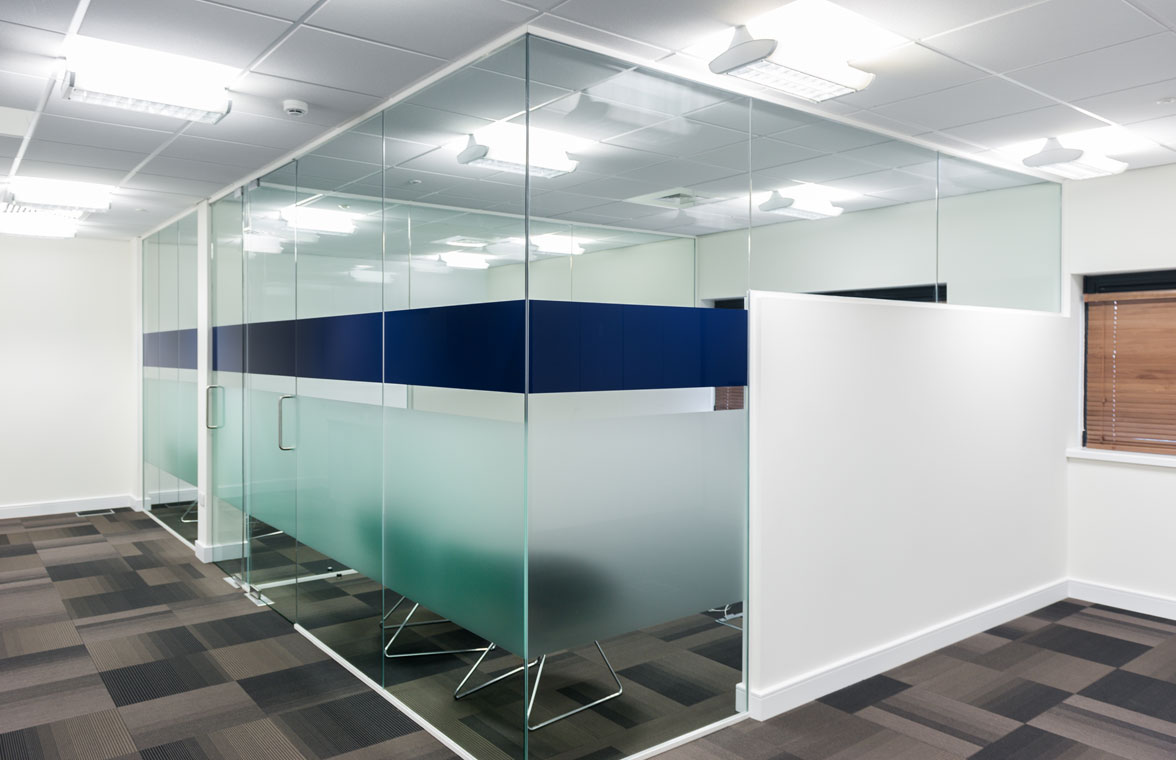
Glass partitioning

To provide an element of separation, but to ensure light flows into the breakout space, using glass partitioning can form an attractive and practical solution.

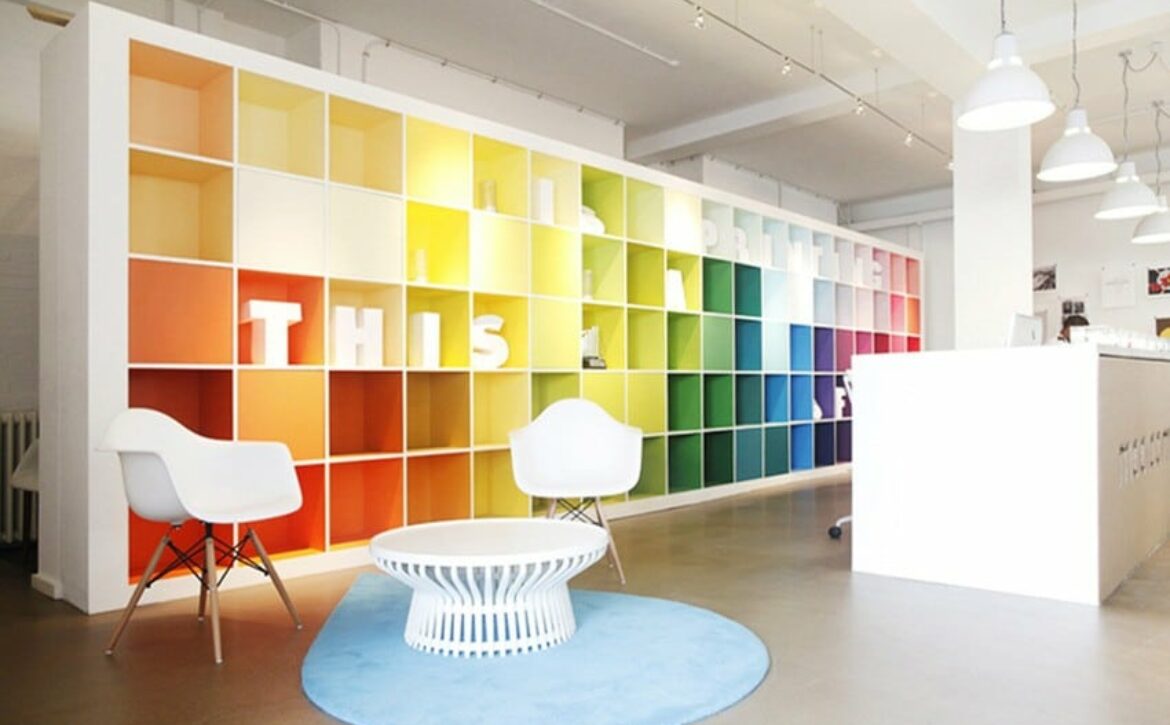
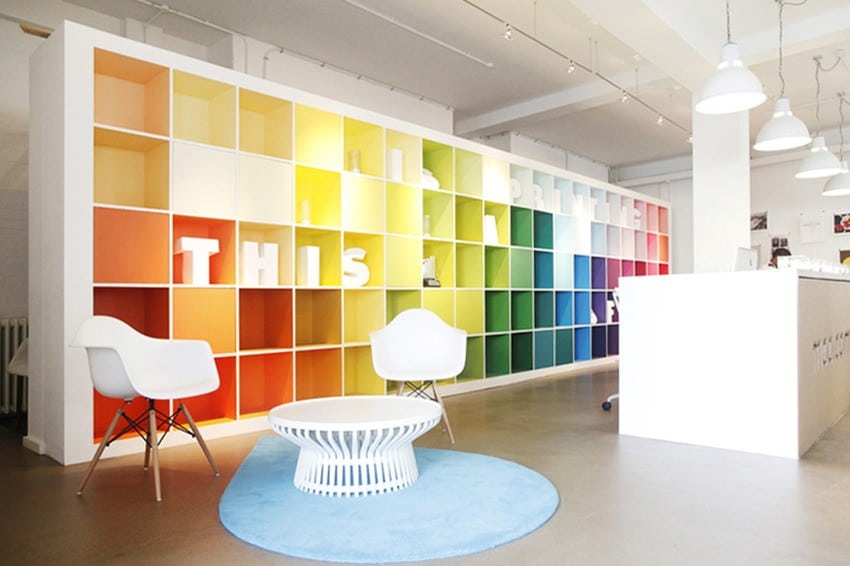
Company branding

The breakout area can be a place to have some fun with the company branding, incorporating colour into furniture, soft furnishings and paint finishes.

Recharge rooms

Creating a sanctuary of calm among a vibrant and busy office can provide an area for staff to recharge their batteries and take a break.

Lounge area

You may find in a larger company that a lot of staff go off-site for lunch, to either a coffee shop or sandwich bar. If space allows, creating a lounge area with a coffee shop vibe can encourage staff to socialise with each other during their downtime, form better working relationships with colleagues.

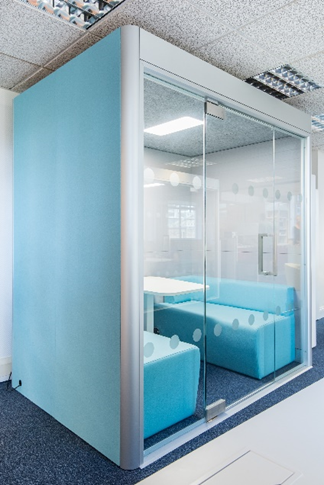
Pods

These self-contained areas for smaller offices, can provide a private area to carry out work in peace, make a sensitive phone call or have a meeting with a colleague.
Office Breakout Area Furniture

Selecting furniture for your office breakout area design will depend on what you plan to include.

Types of furniture to be incorporated would ideally include:

  • Breakfast bar
  • Sofas and relaxed seating
  • Low coffee tables
  • Poufs
  • Benches

As with all office design, considerations to natural light, ventilation, and foot flow all come into play when designing a breakout area, so it is sensible to seek advice from a specialist office fit-out company when planning to incorporate this type of space into your office.

Explore our office fit out and refurbishment services today to learn more about how we can transform your space.
How to Design a Productive Office Environment

Ensuring workspaces are designed to promote well-being is key in creating a positive working environment. As employee wellbeing and satisfaction can have a direct result in a happier, more productive workforce, it is worth investing in an office environment where workers feel comfortable, with their needs met. 

This article looks at the following areas, which we consider important elements to office layout design that help to create a productive office environment:

What is office design?

How does office design affect productivity?

Green Spaces

Breakout spaces

Natural Light

Ergonomic Design

Colour Scheme

Office Temperature

Top Tip: Check our Meridian Interior’s Guide: Must Have Office Features Employee Will Love 

What is office design?

The way an office is designed is paramount to how ‘good’ it is. Good office layout design impacts favourably on staff well-being and productivity, as well as creating a positive impression for visitors and customers alike.  Making investment in office design, smart business sense.

Office design utilises space planning practices to create effective layouts, to ensure footfall flows efficiency throughout the space, air and light moves effectively and collaboration between staff and departments is possible. 

Graymatter – Milton Keynes

How does office design affect productivity?

As well as the physical layout, good office design also considers the emotional well-being of its users, which can have a massive impact on the productivity of staff. In the past there has been a common misconception that working hard correlates with high productivity. Confinement to a desk within a booth, without sufficient down-time and nutrition intake reduces productivity, despite spending longer on tasks. Office layout ideas can be simple, but effective, to create a good working environment that meets the needs of workers while reflecting your workplace values and business model. 

So a well-designed office, where there are dedicated spaces to relax, quiet areas for doing tasks that require more concentration, collaboration spaces etc. can not only produce better productivity through smarter working, it can improve staff’s work life balance. Businesses  are only as good as the staff we employ!

More than ever, office design will play a key role in the productively of staff and subsequently the success of a business.  As many of us have become accustomed to working from home (whether you have enjoyed this experience or not), we should take learnings from this experience and use it within future office design. 

Green Spaces

Green Space is an area that many will have been able to enjoy when working from home (especially in the summer months) by working or taking a break in their garden, on a balcony or near an open window. In many workplaces this does not present itself as an option because it has not been incorporated in the office design or the office is located in an urban location with little outside space. 
However, the centre for Sustainable Healthcare found that staff who said they regularly spent time in their sites’ green spaces during the working day “reported significantly higher levels of wellbeing.” This implies that by bringing more of the outside in, with living walls or planting within offices, can also help with staff’s well-being and therefore productivity.

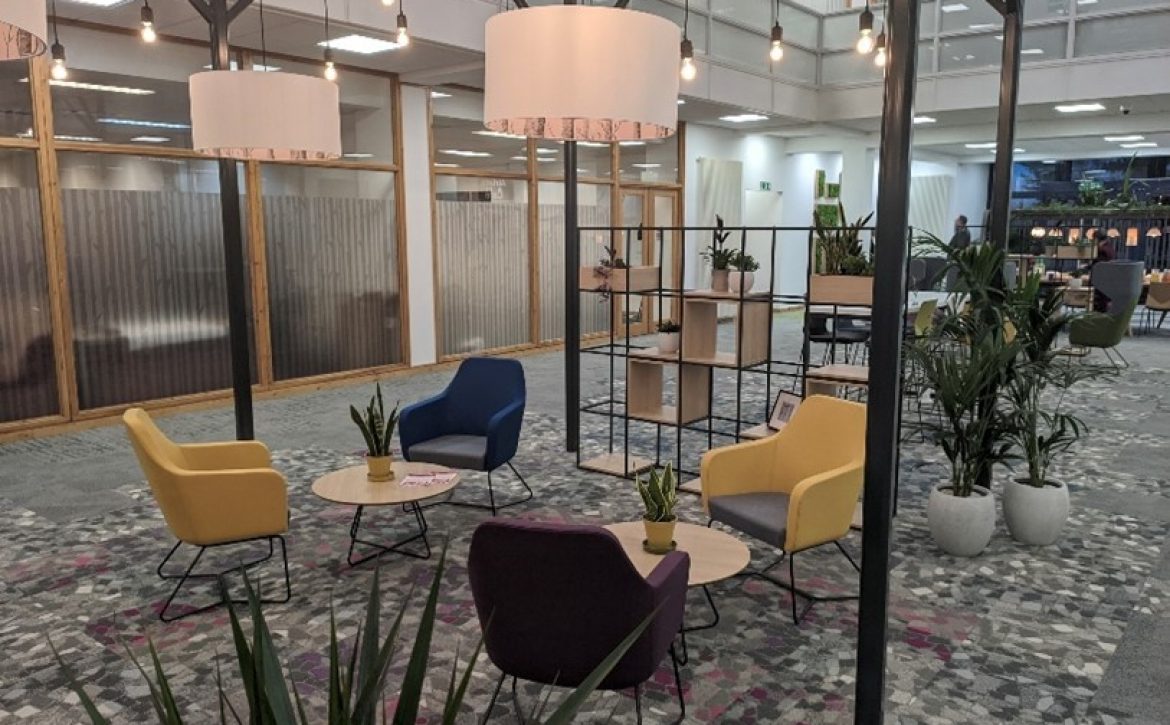
The Parks Trust – Milton Keynes

Breakout spaces

Any well-designed office that takes staff well-being and subsequent productivity into account, needs to plan their breakout spaces. 

There are different types of breakout space, and it is important to consider what the user is seeking to gain from the space.

Most people think of a canteen or large seating area, where staff can eat their lunch, when they think of breakout areas. Whilst these may be required, especially in larger offices, this type of environment isn’t for everyone and might not necessarily give staff that well-earned break!

Providing more private spaces, smaller spaces, more relaxed areas, where people can actually have a rest from work and carry out personal responsibilities, should be considered.

The purpose of a breakout area is to get away from your desk, to protect staff from stress and anxiety that comes from being overworked. An area to retreat to is therefore essential and staff should be encouraged to break from their desks, and a good employer should provide a separate space to do this.

Point of Difference – Banbury

Natural Light

It’s scientifically proven that wherever possible we benefit from natural light and this is a precious resource in any office, as we spend so much of our day in this environment. Natural light is particularly important, not only because it helps us to see, but because of its impact on our circadian rhythms, hormones and mood. 

Therefore, at the planning stages of any office design, it is important to include the location of natural light into your designs, to see where windows or light wells are and how to best utilise these for maximum effect. 

Equally, the intensity of the natural light is to be considered, to promote the most productive working environment. It is no good having natural light streaming through the window, but staff can’t see their screens clearly.

Ergonomic Design

Using ergonomic design in offices to help with productivity is key, as it is essentially the process of designing workspaces to best suit the people who work in them. 

Productive staff will be the ones who are comfortable in their workspace. They will have the correct type of chair with good support, desking that moves up and down so they can stretch their legs, the correct screen and mouse configuration with wrist support, footrests, the list goes on…

Ergonomic design needs to be considered in workplaces in particular, due to the length of time people spend there. All chairs essentially do the same job, but they are designed to do different tasks. Some are designed to be used briefly, like in a waiting room, and therefore do not offer comfort but others, like a task chair in an office, will need to offer many elements of support, for different sized people and to be used for long periods of time. Throughout a workplace, different types of seating will therefore need to be considered for the different areas created.

The Parks Trust – Milton Keynes

Colour Scheme

As with natural light, the colour of our surroundings can dramatically affect our mood, which impacts on staff productivity. It makes sense that happy, more positive staff will be more productive. 

Choosing a particular colour scheme for your office can often be led by brand presence, as this gives an element of identity to a space. However, as colour can directly affect our morale, it’s worth considering what type of people make up your business and what type of environment you are trying to create, before selecting your colour scheme.

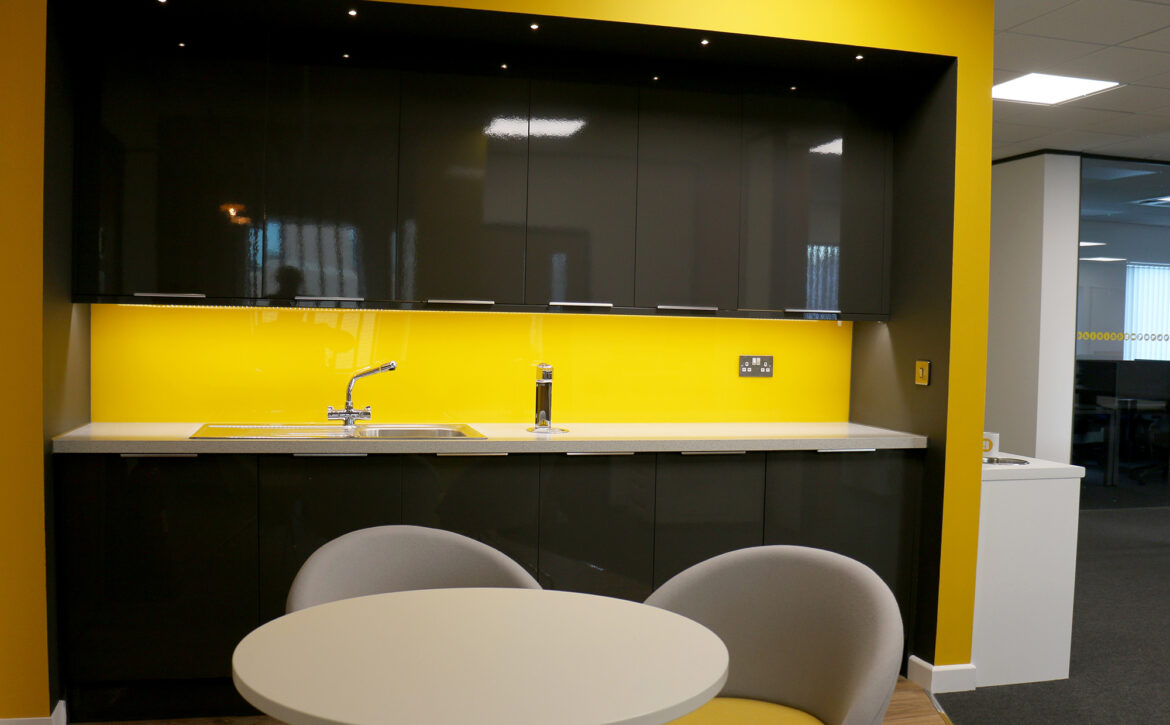
Calming colours such as white, blue, green and purple can be used to promote rational decision making. Warmer colours such as red and orange could be used in a more dynamic space, but used in smaller doses, so as  not to overwhelm the user. Yellow works well in a kitchen or break out area, as it helps to brighten your mood and energise you.

Office Temperature

This element is often fought over within offices, especially in open plan spaces, because people find different temperatures comfortable and the nature of ventilation systems is that within an open space, there will be some colder spots and some warmer spaces. 

The fact that it is so hotly contested (excuse the pun!) in workplaces around the country just illustrates what an important element it is to the productivity of staff within an office. Too warm and people may become lethargic and if it is too cold people find it hard to concentrate, as their energy is going into keeping warm. 

The discussion points in this article barely scratch the surface, as there are so many more elements to consider, which goes to show how much is involved in getting your office design right. It may therefore be useful to speak to the experts when you decide to plan your next office.

At Meridian Interiors we have 20 years of experience in helping clients design office schemes, so please contact us if you would like our guidance. You can email us on [email protected] or ring 0333 3448 772 today. 

Air conditioning your office space

Anyway, enough with all the science stuff. Let’s get into the benefits, how/why it affects people differently and the design considerations within an office space.

Ventilation & air conditioning; the benefits for staff and visitors

Heat can make workers feel hot, flustered and sluggish in the office. Many studies back this claim and as the warmer weather sets in, discomfort is more apparent, resulting in poor productivity. Air-con systems provide appropriate ambient conditions for employees to concentrate and work effectively; negating this productivity slump. Here are just five of the benefits for both staff and visitors alike:

⦁ AC allows windows to stay closed, negating pollen intake among hay fever sufferers, reducing symptoms and improving work ethic as well as keeping out the noisy external environment.
⦁ AC reduces heat and moisture levels. Mould and mildew stop forming, reducing maintenance costs and potential respiratory issues
⦁ Air quality is improved as AC units contain purifiers, reducing nasty bacteria and dust particles responsible for sickness, low motivation and productivity
⦁ Conditions such as noise levels are undisturbed as modern AC units operate almost silently
⦁ Clients will feel good in a conditioned environment. A comfortable, welcoming space prompts customer visits and business growth

Office temperature; a bone of contention?

The simple fact is that every individual has his or her own unique preferences. Some shared, some different to others. With this in mind, it’s important to note men and woman’s idea of the ‘perfect temperature’ differs at physiological levels. This is dependent on our gender, age, weight, ethnicity and adaptability. The bottom line? Women generally feel colder than men. Arise, the bone of contention and potential office conflict! But don’t panic… We’ll explore some key points to consider.

Physiological differences are to blame, not your colleague’s mood! A study found woman typically produce less body heat than men. They’re more likely to feel chilly in the office, whilst men tend to feel warmer. Everyone knows a happy workforce is a productive one, so how do we accommodate everyone? An agreeable solution seems impossible, right? We recommend sticking to the guidelines. The Approved Code of Practice states a minimum workplace temperature of 13-16 Celsius, depending on the activities carried out. Not everyone can be pleased, so a tip for those suffering in colder spaces – have a portable heater to hand! Try and find a happy medium, gather a general consensus of an appropriate office thermometric.


To dig into this topic a little further, we’ve carried out our own research, asking 1000 UK office workers whether they felt too hot or too cold in the office. As predicted, women are officially colder at work, with 37% of females saying they often felt cold in the office, and 13% saying they felt cold in the office all the time! 

We also analysed the temperature debate by age, and the youngest age demographic, 18-24, appear to be the coldest at work, with 48% claiming they are cold in the office all the time. In fact, there was a noticeable correlation between age and how warm or cold people feel in the office, with older age groups less likely to feel cold at work than their younger colleagues. 

Lastly, we had a look at geographical location to see whether this had an impact on people’s opinions. Residents in Wales were the most likely to feel cold all the time, followed by workers in London. Surprisingly, workers in Scotland were the least likely to feel chilly! 

Air conditioning considerations within office design

So, we’ve explored the science, the benefits and why AC affects people differently. Yet a question still remains, how should AC be considered within office design? Air con specialists will examine the parameters of an office, the number of people, as well as exit points such as windows and doors. In addition, sun trajectory, building structure and ceiling types will all be looked at closely to determine spatial configurations.

The design of an office impacts how well the AC works. They work well in open-plan areas, however individual spaces should have their own systems. Finally, consider the businesses critical equipment and cooling needs. The modern workplace contains tech that generates a lot of heat. It’s important to filter this to improve operating efficiency, ensuring safety in an optimal workspace.

But need not worry! Our team of experts will design your office with comfort and ventilation in mind, maximising airflow for a happy, productive environment. Get in touch with us today!


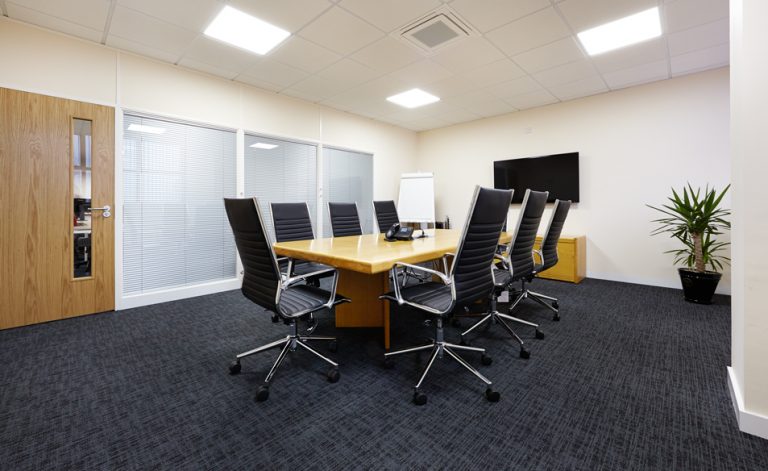
wooden boardroom table with black chairs and TV mounted on wall

Acoustics in Offices

Many modern offices are designed using an open plan layout and for good reason, as this type of space is ideal for building staff relationships, collaborating on projects and making all staff approachable.

However, with the considerable size of some open plan offices, the noise within these spaces can reverberate across the workplace, creating a distracting environment to try to work in.

Using our experience in office design, we are keen to share the ways in which we believe you can reduce the noise pollution within your office.

How can Carpet Tiles help?

Have you ever been sat at your desk and been distracted by the noise pollution from a colleague putting their cup down or being drawn into a conversation that is being had on the far side of the office?

This transfer of sound can be reduced by the installation of carpet tiles with an acoustic backing. This backing material can dramatically reduce the distance that sound waves travel throughout the open plan space, making them an ideal product to use within your office to improve the working environment of staff and colleagues.

A benefit of using carpet tiles is that they are also a fantastic way of incorporating colour and design into your work space.

Our suppliers have various products with different specifications, which can be used in different areas throughout your office facility.

Protecting the Ceiling…

Many offices have suspended ceilings, which in themselves will not stop too much noise from travelling throughout offices. There are a few things you can do, depending on your budget, to reduce the noise within larger spaces with suspended ceilings.

Firstly, a cost effective solution to reducing the movement of ‘room to room’ sound and the reverberation of noises in the office below, is the installation of polythene encased pads above the ceiling. These pads are the same size as a ceiling tile and simply lay on top of them. This product can be installed easily and the encased product ensures no loose fibres are left above the ceiling.

A more involved option is to add acoustic panels below the suspended ceiling. Not only does this offer better acoustic performance within an office, it also offers aesthetic opportunities, as these panels are visible from the office below. These panels come in different shapes and colours; and can even have artwork printed on them. This ensures they not only fit into your office space seamlessly, but they can also add an additional layer of design into your workplace. These acoustic panels can also be used on both walls and ceilings.

Screening and its attributes

We all need desks to work from, so another effective way to enhance acoustic protection is to add screens to our desks. These screens are a good way of breaking up the open space and creating more private spaces. As with other acoustic solutions, screens come in different shapes and colours, so can be used to accentuate a particular design, for branding or used to zone areas within your office.

What is booth seating?

In addition to free-standing screens, booth seating can be used within open plan offices to break up the space, offer breakout areas and informal meeting spaces. Used to good effect, you can create a welcoming and well-designed working environment, for staff and visitors alike, while not distracting or being distracted.

Phone booths in offices….

Not all works paces have ample space for large meeting rooms, but that doesn’t mean you can’t enjoy areas within your open plan office where you can get aware from the noise of the office and have a private conversation.

We are seeing a rise in the popularity of ‘Phone Booths’ within office design, as these are relatively small pods or meeting rooms, made from acoustic material and are fully demountable and relocatable.

Our team of experts are capable of designing a system for your office, to assist in improving your working environment. They would welcome the opportunity to discuss your requirements, so please contact us today!

Can Office Design be Inspired by Working from Home?

We all know that due to advances in technology, the modern way of working has changed substantially within the past decade. We are now able to work effectively from home, out on the road or even from another country!

These changes have unsurprisingly altered the working environment within offices as well, seen through the expansion of areas for ‘hot-desking’. But can we learn other lessons from these modern ways of flexible working, to improve the offices in which the majority of us still work?

At Meridian Interiors we have been thinking about the ways in which we could use some of the advantages of working from home to help your office staff get the best out of their working day.

Working remotely could offer the following advantages:

  1. A comfortable or more relaxed environment to work in
  2. Less interruptions, improving productivity 
  3. Improved work-life balance
  4. Lowered stress levels and a greater well being

As it is not possible for all staff to have a flexible working arrangement, it therefore seems sensible to establish areas within offices where staff can go to work uninterrupted for short periods to concentrate on a project, without the regular interruptions from colleagues and telephone calls. This could, more obviously, improve productivity but also the mental well-being of staff, who feel like they are managing to get through their ‘to-do list’. 

In conjunction with this, a well presented and aesthetically pleasing break-out area can help employees to enjoy breaks from their screens, benefit from a relaxed break with colleagues and feel more valued. 

You can read more about this in our blog ‘The benefits of encouraging staff to use breakout areas’. 

Creating a comfy working environment is also key and we can use good lighting, relaxing colours on walls, domestic style commercial flooring and advances in modern office furniture design, to this end. Supplying ergonomic furniture, sit-stand desks, relaxed break out furniture, anti-glare screens can all improve the experience for staff, while they are at work. Our sister company Meridian Office Furniture are experts in designing bespoke workstation solutions and they are keen for you to contact them, if you would like any more ideas.

So if you would like to explore how your company could improve the working environment and subsequently increase staff productivity through forward thinking office design, please contact Meridian Interiors today!

A Full ‘Turn-key’ Service

When you embark on a new office refurbishment, the amount of different tasks to think about can seem daunting, especially if you are developing designs, sourcing trades people, dealing with building regulations, working with a project manager through another company, the list goes on…!

If, however, you choose to deal with a company, like Meridian Interiors, who offer a full ‘turn-key’ service, you benefit from dealing with a main point of contact who can look after the following services and talk you through the project from beginning to end:

  • Space Planning
  • Office Design
  • Product Sourcing
  • On-going Project Cost Analysis
  • Project Management and Change Management
  • Health and Safety Coordination and Management
  • Local Authority Regulatory Compliance

Benefits of using Meridian Interiors for your ‘Turn-key’ Service

  1. One point of contact with specialist knowledge and expertise.
  2. Better communication and quicker project turnaround.
  3. Bespoke service, tailored to your needs.
  4. Use of an Office Interiors company, who work with a sister company, specialising in Office furniture.

Our Team at Meridian are customer facing, always pleased to discuss your future projects and we are proud of our reputation for gaining repeat business, which equates to 80% of our annual turnover.

If you would like to experience what Meridian can offer for your next interiors project, please do not hesitate to contact us today!

Floor coverings within Open Plan Offices

One of the enjoyable parts of embarking on an interior design project for your office or commercial space is getting to choose the colours and materials that will make up your new working environment.

The skill comes from knowing how to put all of these elements together to create a well-laid out space, which offers a nice environment for staff and clients alike.

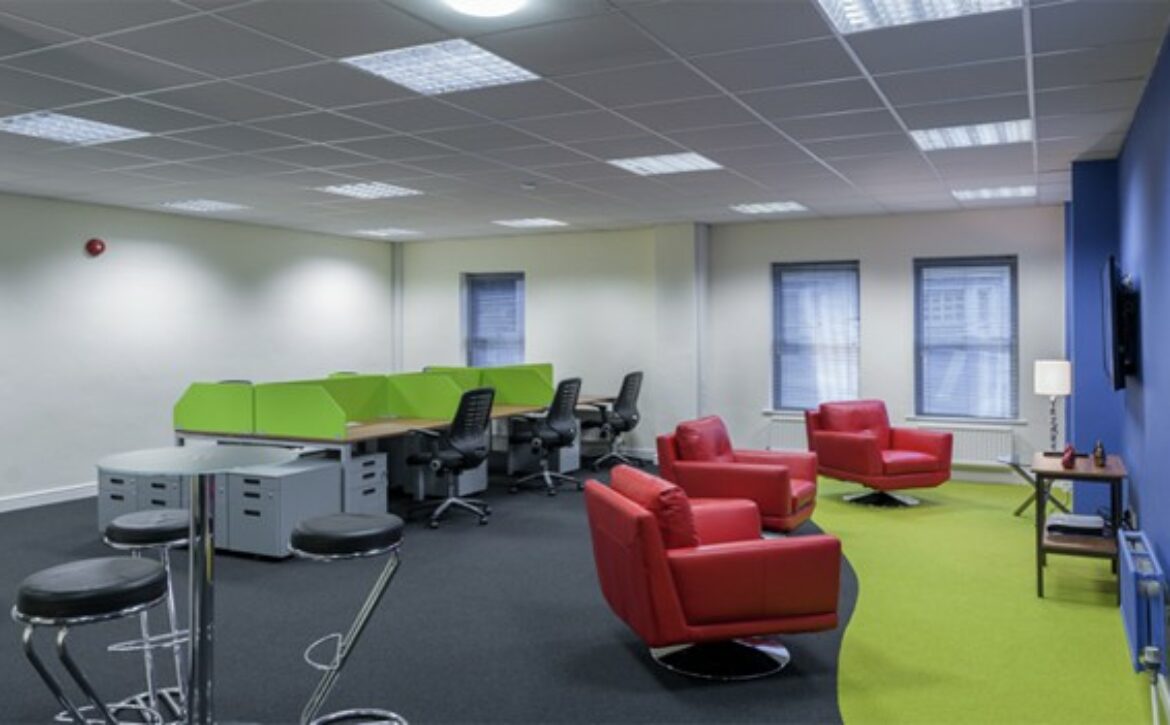
One way in which this can be achieved is to use contrasting floor coverings to distinguish between areas, which works especially well within open plan office environments.

Different types for different purposes

Flooring can be used for different purposes, from creating a safe, slip free environment, to a luxurious and opulent space.

Even within one building there will be the opportunity to use different types, textures and colours of floor covering, whether it’s to differentiate between a break-out area, Kitchenette, Boardroom or walkway.

Within a large open plan office you may want to distinguish between departments, with a subtle change in colour or a patterned verses plain carpet tile.

What would we suggest?

Within an open plan office environment we would suggest using contract grade carpet tiles, which are hard wearing and easy to replace in a small area, if needed.

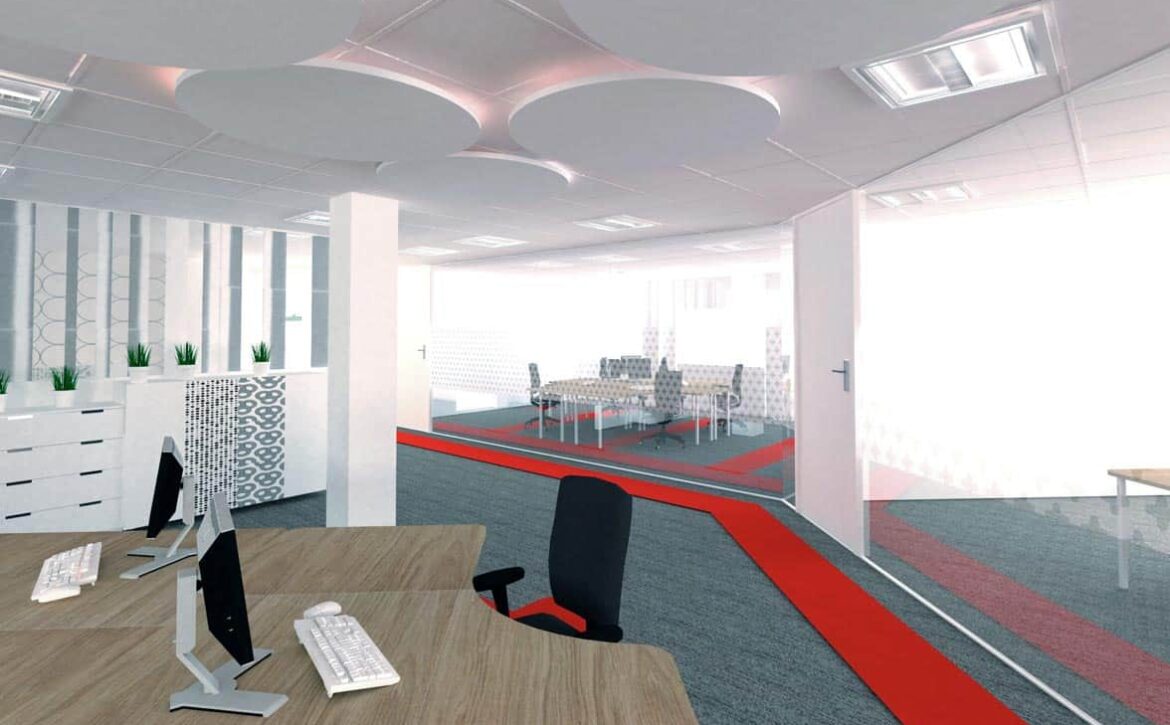
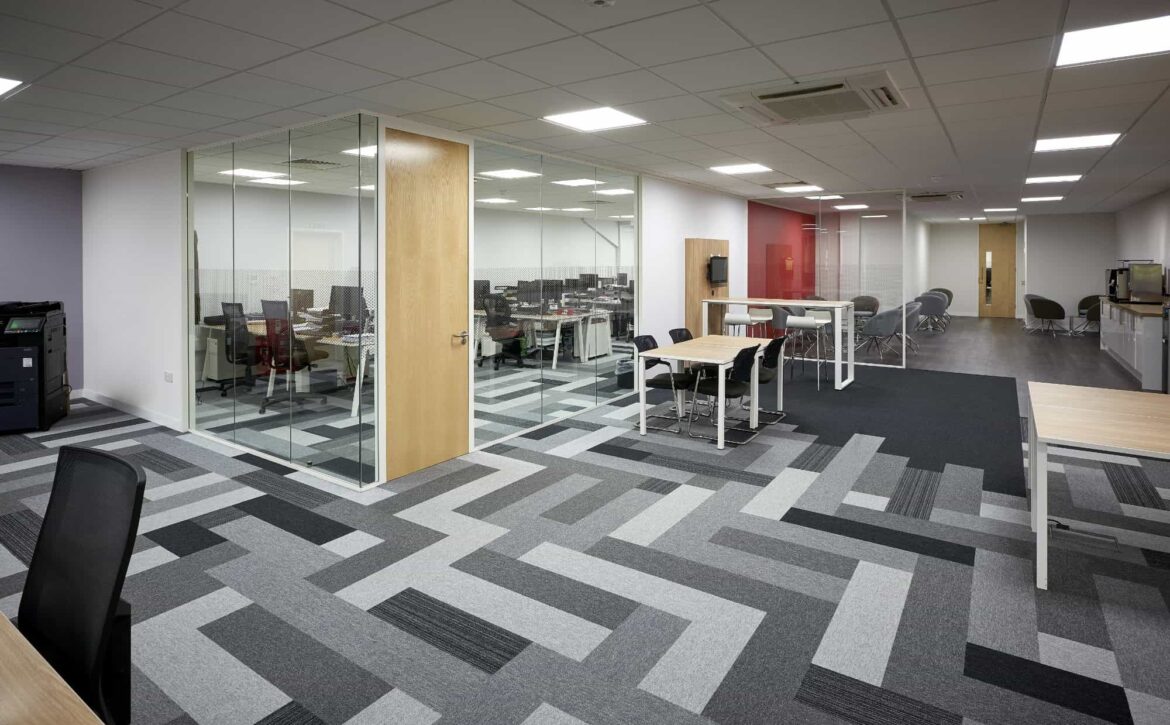
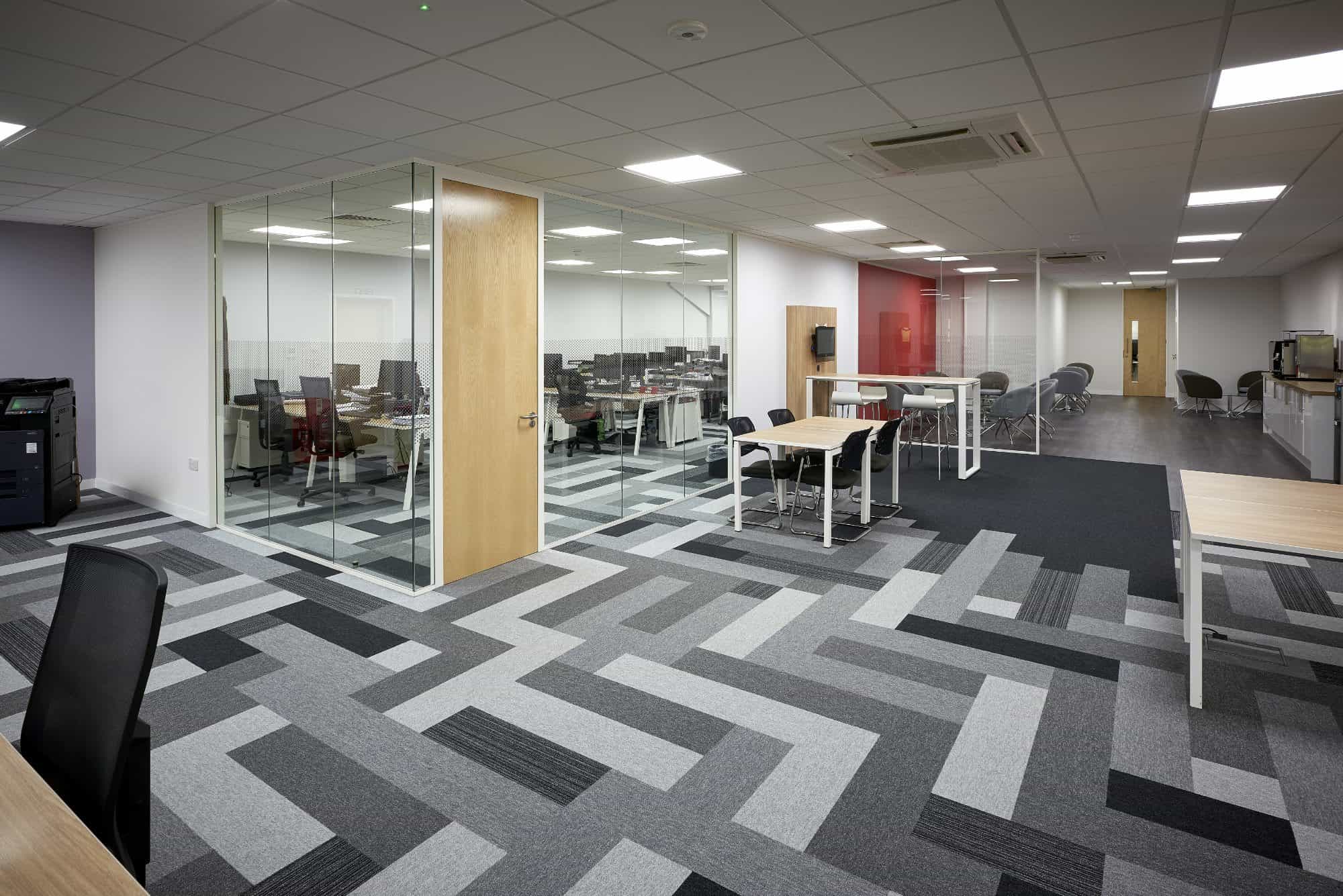
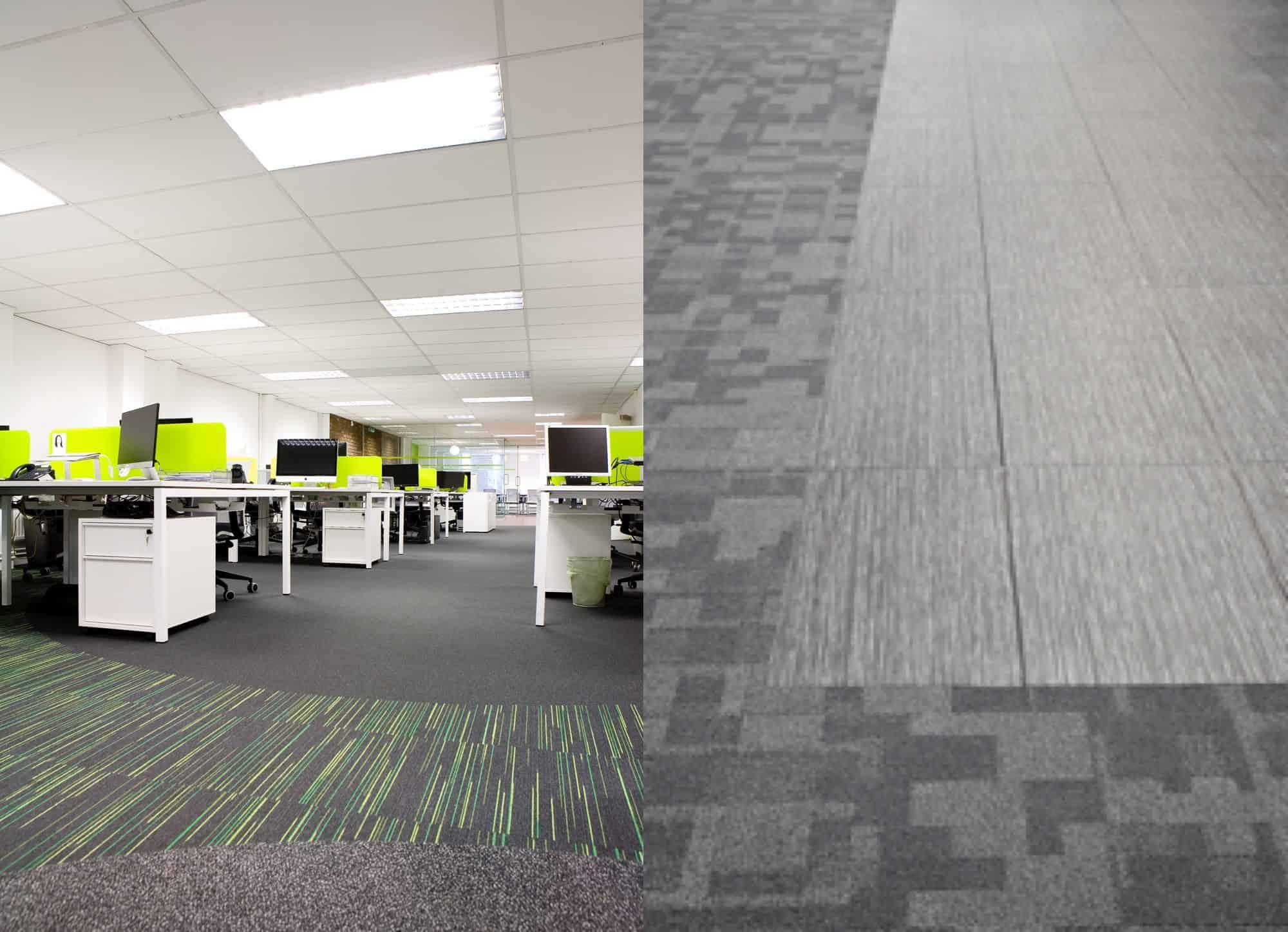
Another benefit of contract grade carpet tiles is the vast choice of colours, styles and shapes that can be used to create impressive designs. We can now choose from planked carpet tiles, offering more ways to design flooring layouts, create zones and add flashes of colour.

Luxury Vinyl Tiles (LVT), which are available in ranges that offer the aesthetics of real wood and stone, can be used in partnership, alongside carpet tiles, without causing a trip hazard. This can work well as a clear way to distinguish between a Reception and office area, a Kitchen within an open plan office or a walkway within an office.

At Meridian Interiors, we are experts in design and planning and would be happy to help you with all aspects of your interior refurbishment, especially discussing all of the possible flooring options and how it can make your refurbishment come to life!

Setting the Boundaries – Effective Office Partitioning

Discover the secrets to mastering office partitioning from office experts, Meridian Interiors Ltd

Not all offices will be built in line with your company’s departments, teams and functions. Fit the space around your business with office partitioning. These cost effective walls can be quickly deployed to create an organisational layout that suits your needs.

Use this quick guide to assess what types of partitioning is best for your workplace to help maximise efficiency, reduce noise between departments and generally provide a non-disruptive flow of foot traffic around the operational areas.

Stud

This is the most basic type of partitioning, consisting of a poly-plastic or metal frame, secured to the floor. This forms a skeleton structure that is subsequently covered with panels to create physical partitions. Plasterboard is typical used in the construction of these partitions.

Glass

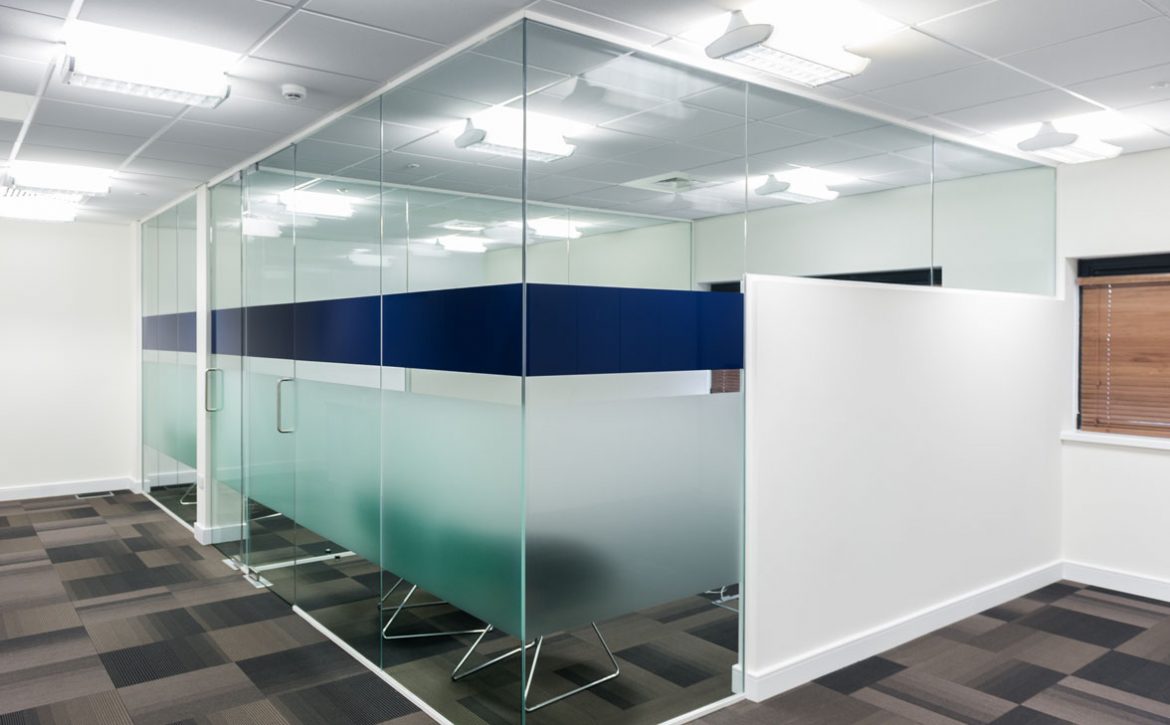
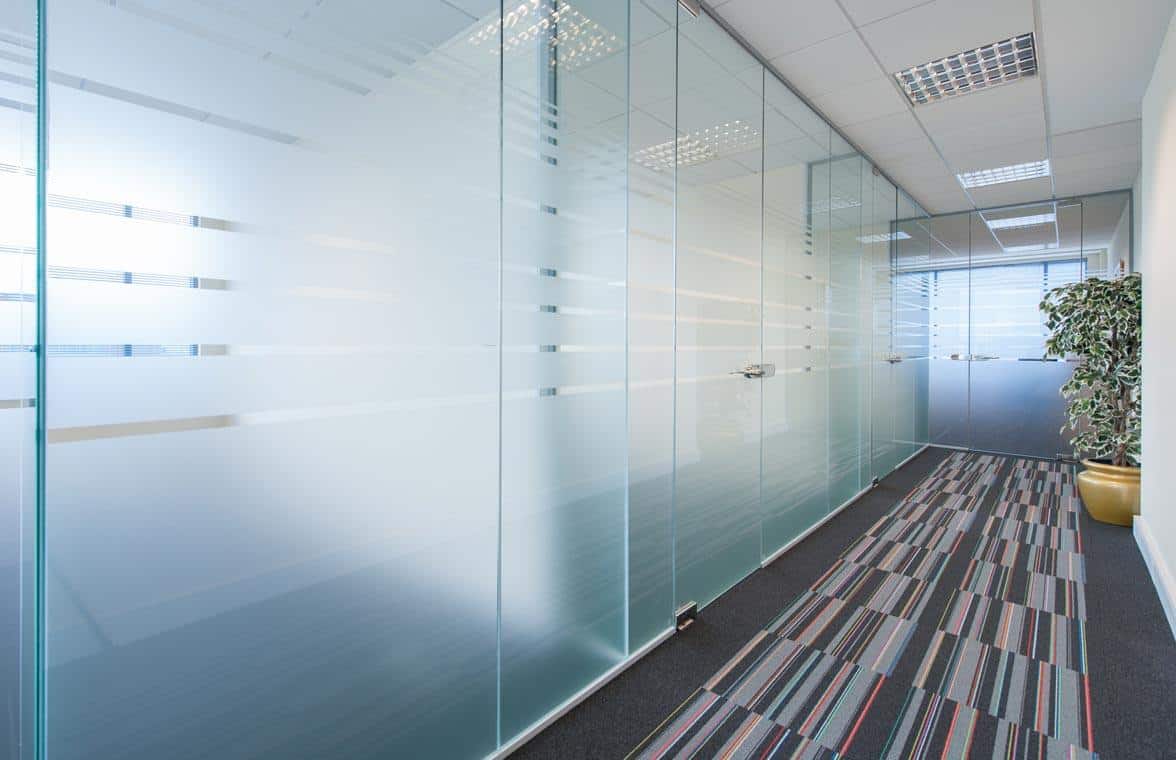
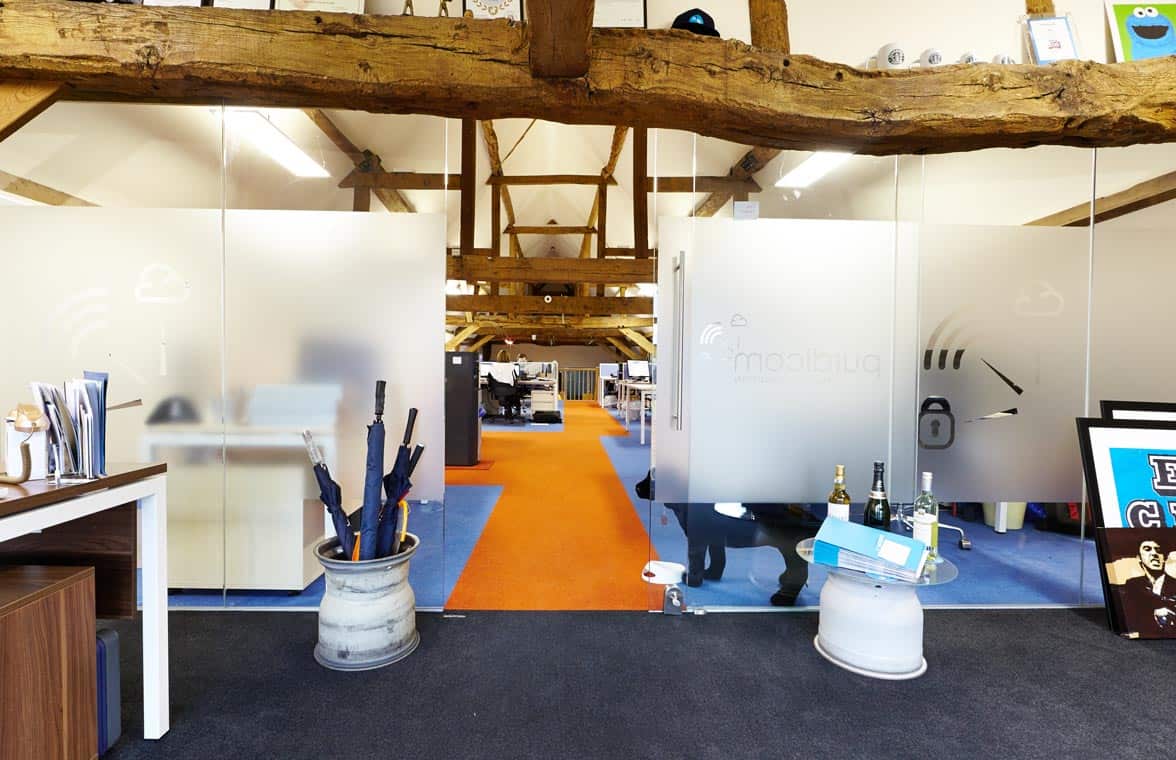
Glass partitions are like stud partitions, however instead of solid, opaque panels, glass sheets are added to the structure, creating transparent barriers. This type of partitioning is especially useful when an area of a workspace suffers from a lack of natural light. Glass can be double glazed to create insulation or frosted with the company logo.

Temporary Partitions

Extending curtains or concertina partitions are one way of creating a temporary barrier between different areas of your workspace. This type of partitioning is often found in hotels or conference rooms, allowing the business owners to scale the space in accordance with client’s demands.

Timber Partitions

Timber partitions use an all wooden construction, from the structural supports through to the panels. Creating an elegant and classic profile, timber partitions, particularly those made from hardwood are a stylish alternative to conventional stud systems.

Cubicles

Smaller, individual partitions are available to mark out individual booths or working areas in open plan offices. This type of divider allows for employees to control their immediate working environment, whilst also promoting communication and collaboration through members of the team.

Creating Functional Areas in the Business

The principle reason for partitioning is to delineate space within the office or workplace environment into rooms and sections for various purposes. Separating each individual area promotes a focus on specific business activities, allowing a more ordered and structured organisational framework. Some of the more common uses include:

Sales floor

If you have a busy outbound calling floor this can often create quite a large amount of noise, commotion and energy. Whilst this is great for the salespeople, this can prove disruptive to other functions in the business and partitions can dramatically reduce this issue.

Executive office

Partitioning can allow individual spaces to be created for company directors, offering a degree of privacy for important calls and operational discussions with the business leaders.

Boardroom

Every large business needs a boardroom. Even though such rooms often now function as meeting rooms for different teams and important client presentations, the large table, set seats and chairs create a sense of purpose and presence.

Reception area

Keep clients separate from the functional areas of your business with a designated reception area. Here they can drink coffee and wait for taxis to pick them up following meetings without having to leave the building.

Department location

If your business is large enough to have dedicated departments, then partitions will allow all the members of each individual team to congregate in a set area. Customer service, IT support, finance and HR can all be given their own domain, promoting team cohesion and understanding.

A Simple Guide – Colour in the Office

A simple guide to increasing productivity at work through the use of colour in office design.

Whether you are an employer, or an employee you may be looking at methods to increase productivity within the work place. Did you know that it could be as simple as adding colour to your office space?

Colour is a powerful tool to not only increase productivity, but also to stimulate, engage and excite those in the workplace.

To choose the right colour for your office space, follow our simple guide!

Blue – For the Mind

Blue is a colour known universally as the colour of peacefulness and serenity. When used in both living and working spaces, it can create a sense of calmness and order. Science has proved that blue aids in lowering heart rate and blood pressure – not only calming the mind, but also the body.

The colour blue is also a leading colour used within the corporate world. Companies such as Dell, American Express and HP all use the colour within their logos. Blue is so widely used corporately as it is a colour consumers perceive as safe, trustworthy and honest.

In a workplace where productivity levels need to be high to complete daily tasks and various tasks – blue is the perfect colour to adopt into the office theming.

Green – For Balance

Green – the colour synonymous with nature and the environment is the perfect colour to aid in creating balance between the body, the mind and emotions. When the body and mind feel balanced, innovation and creativity are heightened.

For workplaces where innovation and creativity is a key component of the business, green is the ideal colour to use within the theming.

Red – For the Body

Red is the most physically stimulating colour; increasing the heart rate and raises blood pressure. Its attention grabbing, which globally is known as a colour to portray warning. The stimulating nature of red makes it the ideal colour to use within offices where employees are highly detailed-orientated.

Within office design, it is recommended to use red as either an accent colour, or use warmer tones such as burgundy.

Yellow – For Positivity

The radiant and uplifting nature of yellow creates greater confidence and positivity, which in turns increases productivity. It’s a fun and cheerful which not only grabs attention, but can create intensity which in turn creates a welcoming and warming environment to work within.

Similarly to red, yellow is best placed within office design as an accent colour. Painting a single wall yellow is just enough to enforce the cheery and optimistic nature of yellow. Yellow is the ideal colour to incorporate in a space which requires energy and stimulation.

Our Floor to Ceiling Campaign

This week sees the launch of Meridian Interior’s Floor to Ceiling campaign. Offering website visitors insight and techniques associated with office planning, fit-out and refurbishment, the campaign will feature a series of comprehensive on-site articles each profiling an individual area of interest.

Paul Kyriakou, Operations Director for Meridian Interiors made the following statement about the campaign: “over our years of working with businesses we have developed established systems of office planning. By providing potential and existing clients with access to our knowledge we hope to help strengthen our existing connections and attract new business.”

He went on to add “in 2017 we are placing a greater focus on utilising the internet as one of the primary tools in our communication strategy. This is why we have opted for an approach that centres of using our skills and ability to provide visitors to our website with an insight into the real value of our service”

The first topics of the two articles are key considerations that companies should review before moving into a new property and a closer look at deploying partitions within an office environment to aid efficiency. The business produces the content in a raw format and then using the services of a professional content expert to style the information into an engaging and intriguing article.

Not only is the campaign intended to assist SMEs in effectively planning office layouts and understanding the furniture options available, it also forms part of a larger web strategy for the business. Through content marketing Meridian Interiors hopes to widen their audience base on popular search engines including Google and Bing.

Meridian Interiors has been in business since 2002. Operating in the commercial sector, they provide clients with a fully comprehensive office interior service. This includes initial design consultations, furniture supply and managing the installation of essential services.